
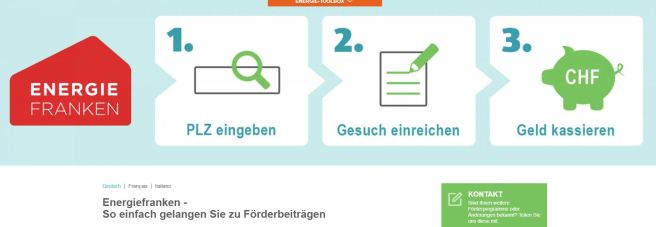
 When you do a web search on energy subsidies in Switzerland, you won’t find some broader overview summarizing the total cost, even less a cost-benefit analysis, but wonderfully designed webpages on ‘how to get more of them’, with a broad diversity of offers by different levels and sections of government, with layouts that look like a combination of Amazon and offers of wellness resorts offering eternal happiness.
Let us assume I consider buying an electric car, or one running on biogas. A quick search will get you to up to USD 2000 initial handout from your local community, the canton (in my case Vaud) will reduce your annual vehicle tax by 75%, and the confederation will not charge any levy on the fuel. For petrol it is more than USD 2.50 per gallon – mostly meant to finance the roads.[1] And you may get special rebates on insurance.
Similar things happen when you use the train (considered to be environmentally friendly and energy saving), except that you get the subsidy by default: users pay less than 45% of the actual cost, the rest is covered by taxpayers.[2] Despite the high subsidy, the share of public transport in total transport decreased from 53% in 1980 to less than 40% in 2016. The strongest impact is on bureaucracy: headcount in central administration of the Swiss railway was 740 ten year ago, it soared to 1,500 in 2016.
You may intend to do something about energy used at home – actually or symbolically. Again, a search provides you with a beautiful shopping catalog of support offers – for better insulation, re-using waste-heat, optimizing your central heating, changing the way of providing warm water, etc. etc.[3]
Further subsidies support the supply of ‘renewable’ energy, with all kind of goodies when you invest in wind or solar, large or small, on the roof of your house for the latter.[4] The low-quality electricity from these two sources (it is produced unreliably when the weather allows – not when the energy is actually needed) gets a guaranteed price of slightly more than 20 US cents per kWh (called in best bureaucrat lingo ‘compensatory feed-in remuneration’, while market prices are around 4 cents. Wind power plants above 1,700 meters get an additional 2.5 cents – leading to ugly installations in our alps. [5]
Part of the arguments of those driving these handouts: it creates jobs and supports innovation. This is a politicians’ and bureaucrats’ myth circulating all over Europe. It is as if the money spent came from nowhere, and had no other use. However, a Spanish study on subsidized wind power showed that there are opportunity costs, that 2.2 private sector jobs were destroyed for every “green” job created by government subsidies. The missed opportunity is investing the money elsewhere, thereby creating in the average of the Spanish economy three times as many jobs.[6] And not surprising, generate very little economic value. According to the Copenhagen Consensus, the value (including the environmental part) generated by investments in ‘renewable energy’ is not only far below average returns of an advanced economy, but with only 0.8 USD per one USD invested even negative.
Above are just examples to illustrate a weird situation. More subsidies and, increasingly, hefty steering fees (taxes and other) are distorting the efficient allocation of resources. And worse is still to come, for instance in the form of a planned tax on CO2 (“Klima- und Energielenkungssystem”[7]).
But how do our Swiss politicians and bureaucrats keep such a strange scheme running? Media and indoctrination have their share. And there are these handouts for more and more people who do ‘the right thing’– forgetting that it is their own taxpayers’ money. Real money is being spent to build ever bigger and fancier castles in the air.

[1] https://www.strasseschweiz.ch/fileadmin/pdf/Jahresberichte/StrasseSchweiz_JB2016_de.pdf
[2] https://www.bfs.admin.ch/bfs/de/home/statistiken/mobilitaet-verkehr/querschnittsthemen/oeffentlicher-verkehr-schienengueterverkehr.html
[3] https://www.energie-experten.ch/de/energiefranken/energiefranken-resultat.html?plz=1807&ort=Blonay#privat
[4] https://www.admin.ch/gov/de/start/dokumentation/medienmitteilungen.msg-id-62433.html
[5] https://www.strom.ch/fileadmin/user_upload/Dokumente_Bilder_neu/010_Downloads/Basiswissen-Dokumente/15_Windenergie.pdf
[6] https://www.instituteforenergyresearch.org/wp-content/uploads/2015/05/090327-employment-public-aid-renewable.pdf
[7] https://www.newsd.admin.ch/newsd/message/attachments/41483.pdf

 ECONOMICS IN CONTEXT